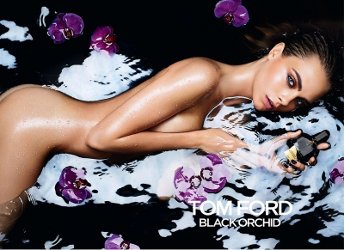
Respondents were asked whether the presence of a celebrity in an ad makes them more likely or less likely to buy the product, or leaves them neither more nor less likely to do so. Just 8 percent said seeing the celebrity makes them more likely to buy the product, vs. 12 percent saying it makes them less likely. But a landslide 78 percent said it doesn't affect them one way or the other.
The new ad promo for Donna Karan’s DKNY Be Delicious ‘Delicious Art’ edition. The first part is live action; midway it switches to an animated version of a pop art comic strip developed by illustrator Brad Hamann. See the print ads below the jump.
Actress Keira Knightley in her latest ad for Chanel's Coco Mademoiselle fragrance. You can see the prior ad, from 2007, here. Back in 2007 there were rumors that Knightley had been "digitally enhanced"; you can check out the 2009 conversation at Basenotes.
(image via the forums at imagesdeparfums, with many thanks to Quarry for the tip!)
In 1950, Cosmopolitan magazine looked a lot different than today's Cosmopolitan, but the audience seems to have been the same then as it is now: young, single women without a lot of money. Unlike Harper's Bazaar and Vogue, which catered to women who had, or at least aspired to, charge-o-plates at Bergdorf's, Cosmopolitan was aimed at the working class woman. I already had a Harper's Bazaar from 1938 that was chock full of perfume ads. How would Cosmopolitan treat perfume twelve years later?
If my issue is any indicator, perfume was a luxury item to Cosmopolitan's readers. It was exotic, expensive, and less important than a fully stocked bar, routing Communism, or finding a husband…