Posted by Angela
on
7 February 2011

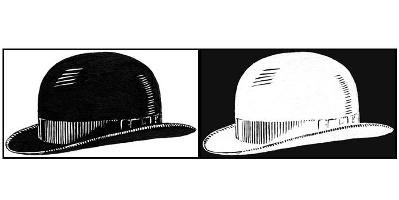
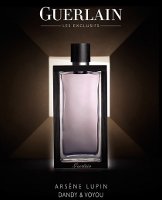
A fragrance named after a fictional thief? Possibly Jean-Paul Guerlain‘s last fragrance? A leathery oriental? I had to try Guerlain Arsène Lupin Dandy.
While I waited for my decant to arrive, I boned up on Arsène Lupin. Maurice LeBlanc created Arsène Lupin in 1905 as the antihero of a series of short stories. Lupin is a sybaritic thief with a keen eye for furniture, paintings, jewels, and pretty ladies. He plans his heists more for the challenge than the loot. In one typically Lupinesque caper, he writes to a Baron who lives in a heavily guarded mansion on a rocky island in the middle of a river. He instructs the Baron to deliver certain of his treasures to him by a particular date or he’ll steal them and more. (He adds not to bother with the larger Watteau in the dining room, because it’s a fake, just in case the Baron isn’t aware.) The clincher is that Lupin writes the letter from jail. The Baron refuses Lupin’s request, and even hires protection for the night Lupin threatens to break in. Sorry Baron. Hope you were insured…
Read the rest of this article »
Posted by Robin
on
19 October 2010

Guerlain has launched two new fragrances for men, Arsène Lupin Dandy and Arsène Lupin Voyou, inspired by the fictional “gentleman thief” Arsène Lupin, from the series of books by Maurice Leblanc. Lupin is sometimes called the French Sherlock Holmes…
Read the rest of this article »
Posted by Robin
on
18 October 2010
French perfume-maker Jean-Paul Guerlain faces prosecution by anti-racist groups after telling a television interviewer that he “worked like a n*****” to produce one of his most successful scents.
— From Guerlain heir in racism storm at RFI. You can also read more at CNN. As it happens, I am on the road today so will be slow to answer comments; since this news is likely to upset many people, I do most kindly ask that everyone keep the conversation civil.
Update: for the most part people have remained civil, but the conversation is getting a little frayed around the edges and lots of varying viewpoints have already been expressed, so I'm closing the comments.

About the author: Nina is our guest shopper for London. If you missed her review of the Perfume Diaries exhibit, you can find it here. She took all of the images for this article.
The Perfume Diaries season at Harrods is not just about the exhibition. Throughout September, there are a number of evening events featuring some of the people and processes involved in the production of perfume.
For me, the most exciting of these was ‘The House of Guerlain’ on 9 September, with Jean-Paul Guerlain himself, and current in-house parfumeur, Thierry Wasser. I went along with my friend and neighbour Stephanie, fizzing with excitement.
All of the events are first-come-first-seated, apart from this one, which was a very hard gig to get into. On the night, the exhibition area was packed, with guests being checked off carefully on a list and absolutely no interlopers allowed to gatecrash…
Read the rest of this article »
Posted by Angela
on
5 July 2010

According to Michael Edwards in Perfume Legends, Guerlain Samsara was the result both of love and a calculated business decision.1 First the part about love. In 1985, Jean-Paul Guerlain made a perfume for an Englishwoman he wanted to seduce. She said she liked sandalwood and jasmine, so he designed for her a fragrance loaded with both notes. She wore it faithfully and told him people would cross the street to ask what her perfume was. (I guess when the chief perfumer for Guerlain supplies you with free, custom perfume, you wear enough to be smelled across a couple of lanes of traffic.)
Now the business angle. About the same time Jean-Paul was pitching woo to his English girlfriend, the house of Guerlain was rethinking its business strategy. For a century the company had created fragrances it thought were pretty, and marketing played a backseat role. By the mid-1980s, perfume wasn’t just a luxury item created by a handful of perfume houses anymore. The tidal wave of entities selling perfume that now includes car manufacturers, jewelers, country music stars, and even fast food restaurants was just cresting the horizon. Guerlain realized it had better draw up a new business model.
Big, exotic perfumes were popular. Yves Saint Laurent Opium raced to the top of the charts in 1977, and Chanel Coco followed in 1984…
Read the rest of this article »