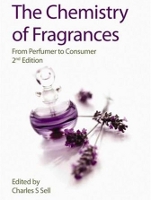
 As a kid I spent many hours watching my father restoring old saxophones. He’d disassemble them at our dinner table, work on the mechanical parts, replace the pads under the keys, and put all the tiny bits and screws back in place. His work always paid off, giving us both a great feeling of satisfaction and pride. I’ve loved beautiful instruments and machines for as long as I can remember, and have always looked up to people with technical skills. Browsing through the second edition of The Chemistry of Fragrances painfully reminded me that I have no such skills myself. It made me realize that I’ve been wearing fragrances for over a decade, and that I was only vaguely aware of how perfumes are actually created and developed. This book, published by the Royal Society of Chemistry, deals with all the essential steps in the industrial-creative process, from handling perfume ingredients to toxicological testing and the outlining of a fragrance brief.
Rather than a do-it-yourself guide for budding perfumers, this is a comprehensive reference book with lots of in-depth insights into technical issues. Like Sagarin’s The Science and Art of Perfumery (1945), Theimer’s Fragrance Chemistry (1982), and Muller & Lamparski’s Perfumes: Art, Science and Technology (1991), it’s more likely to be found on the shelves of fragrance manufacturers than in a perfumista’s collection. But if you know your way around in chemistry, you might find this an incredibly rewarding read.
The first twenty pages are easily accessible to anyone…